Article in Gardner News:
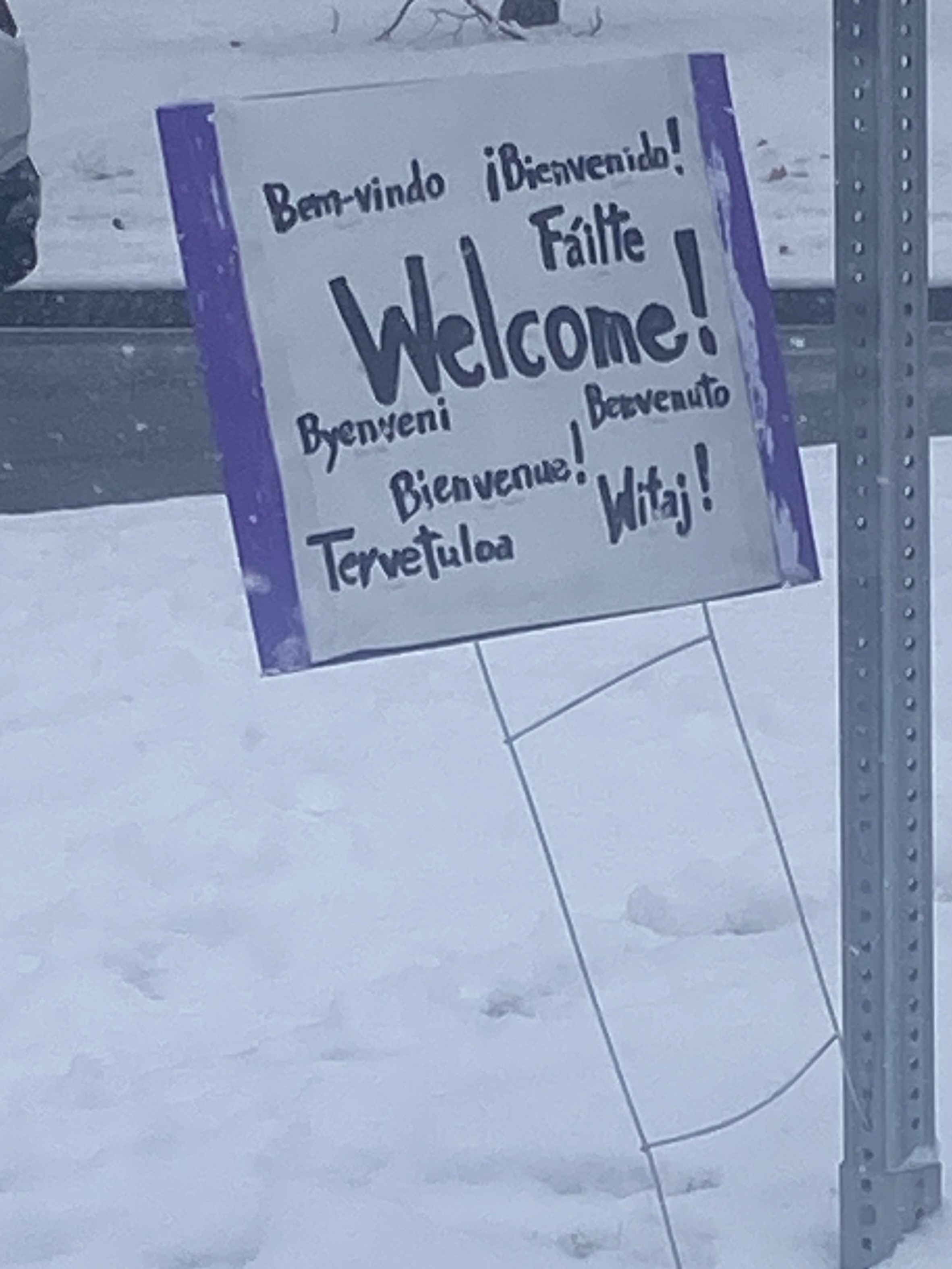
‘I don’t like bullies’: Gardner residents gather at rotary to send message
“All Are Neighbors” group began gathering at Uptown Rotary two months ago
Stephen Landry The Gardner News. January 23, 2025
A group of about 14 residents gathered at the Uptown Rotary for an hour Saturday morning to promote the idea that the Chair City was a welcoming community for immigrants and their families.
The group, “All Are Neighbors,” has been gathering at the rotary for the past 10 weeks, according to Vanessa Lynch of Gardner, who said she was motivated to organize the demonstration after learning about a protest at a local shelter for immigrants and their families.
“When I heard about the trucks and the convoy that were around here and going to the motel and harassing people, I felt really sad, and I imagined that if I was a young student and didn’t really speak English and heard all of this negativity, I would feel really disheartened, but if I saw other people in the community out standing together, it would really be a sign that I was wanted here, ” Lynch said.
More:Gardner hotel providing shelter for migrant families – what we know
Chris Tangora of Gardner is a member of the Unitarian Universalist Church which is located a few blocks away from the rotary. He’s bought a sign that reads “Just Love Each Other” to the demonstration nearly every week for the past few months.
“Basically, I love my country, and I don’t like bullies,” he said.
Weekly demonstration aimed at showing support for immigrant families
Norah Dooley of Royalston is part of a group of volunteer language tutors who have been teaching English classes in Gardner. She said some of her students were immigrants who have found refuge in local shelters.
“When I heard that trucks were circling around in the (shelter) parking lot, I know that their parking lot is full of toys and bicycles, it really upset me,” she said. “So, I told my friends that we should send a message of welcome and love and acceptance.”
Jonathan Dudley of Gardner said that he was at the first demonstration at the rotary and was pleased to see that the event had grown in attendance over the past few weeks.
More:‘Endeavor to help our new inhabitants’: Westminster to welcome migrant families at motel
“We’ve had some cold days and some wet days, but it’s just an hour,” he said. “And people drive by and honk or give us a thumbs up. The first Saturday we were out here someone brought us coffee and others stopped to take photos to show their congregation. Every week so many people slow down to shout out a thank you. It has helped me realize that there are many more kind and generous people in Gardner than there are close-minded and mean ones.”
Reception from passing motorists generally positive
Julie Pera, owner of Many Gifts Speech and Language Therapy in Gardner, said she thought it was important to acknowledge that each individual brings something special to the community. She said she was proud to be attending her first demonstration at the rotary, and she had been keeping track of reactions from passing motorists
——————————————————————————–
Some thoughts about displacement and the universal human need for shelter…
“We were just trying to save ourselves from disaster,” says Maria*, a mother of three who was forced to leave her California home after wildfires destroyed her community.
These words echo the experiences of millions of people worldwide, including internal refugees in the United States. From the increasing number of Americans displaced by extreme weather events and housing crises to international refugees fleeing climate fueled strife and poverty, displacement is a global crisis. Whether caused by climate change, economic hardship, or violent conflict, the challenges do not end once someone leaves their home.
All human beings need shelter. Displacement is a global crisis affecting millions, from flood survivors in North Carolina to refugees fleeing violent civil unrest in countries like Haiti. All displaced individuals face profound challenges, including securing housing, rebuilding livelihoods, accessing education, and overcoming language and cultural barriers. Trauma, food insecurity, and discrimination further complicate their path to recovery, whether they are U.S. citizens displaced by natural disasters or asylum seekers arriving from abroad.
Efforts to address these challenges must focus on creating equitable policies that support displaced individuals regardless of origin. Affordable housing, mental health services, education access, and anti-discrimination measures are vital. We recognize the shared struggles of internal and international refugees, we aim to promote solutions that enable everyone to rebuild their lives with dignity and resilience.
Whether displaced and homeless by conflict, climate, or economic crises, all people deserve a chance to rebuild their lives with dignity.
 We All Are Neighbors